
Last updated October 16, 2026
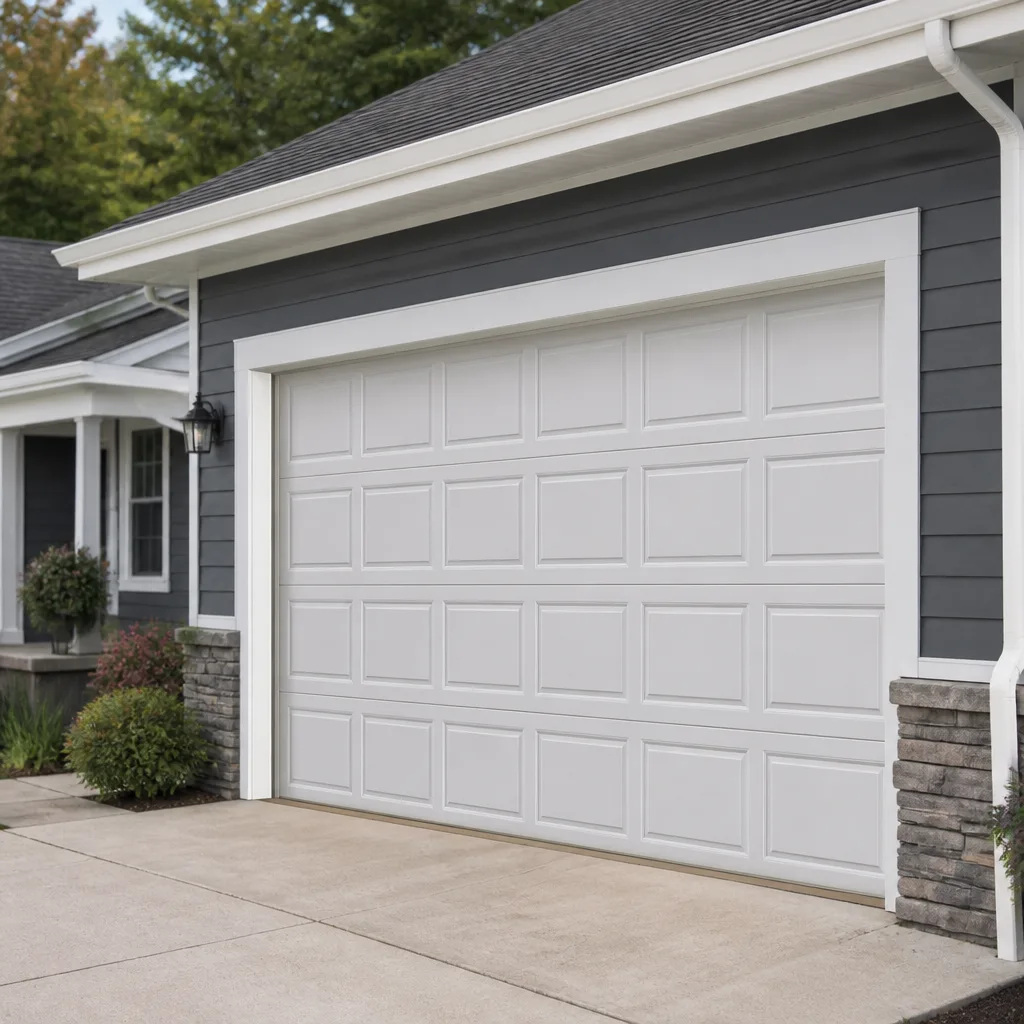 Raised-panel steel
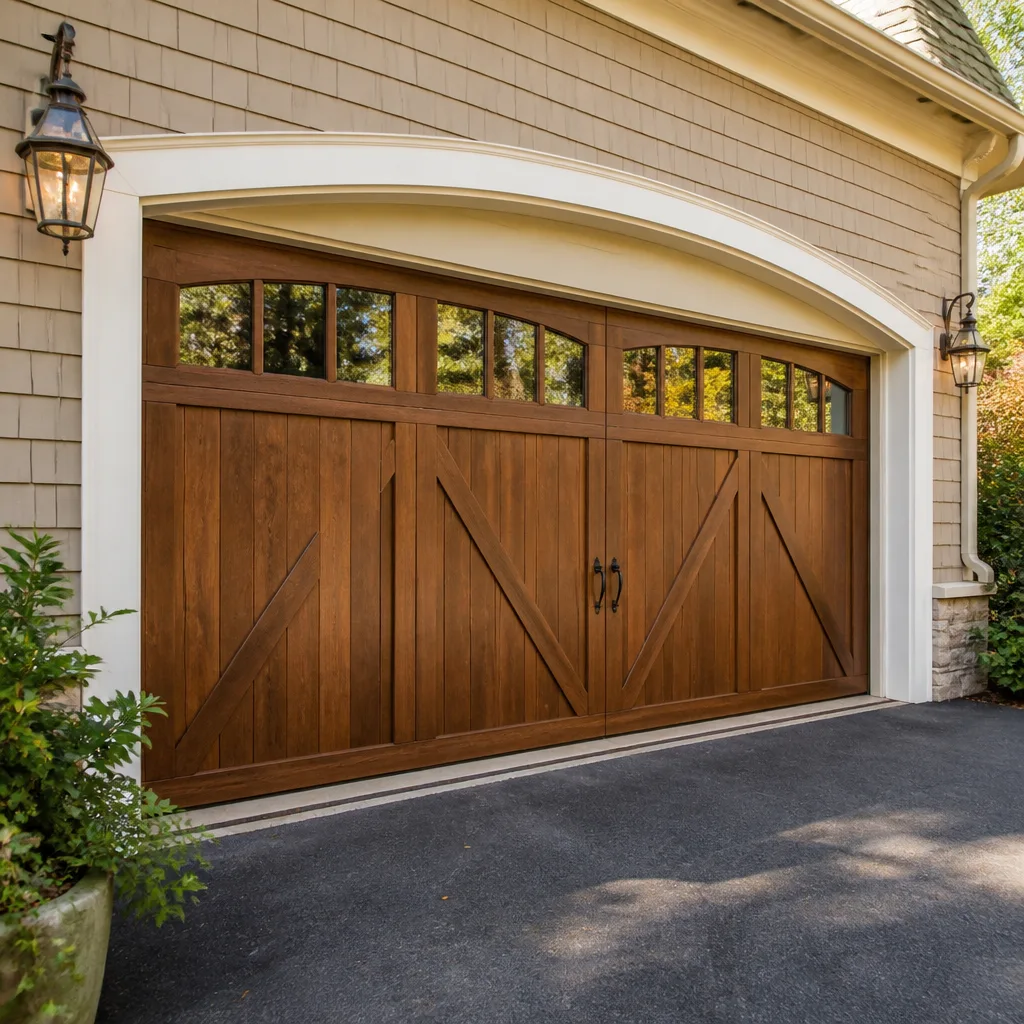 Carriage house
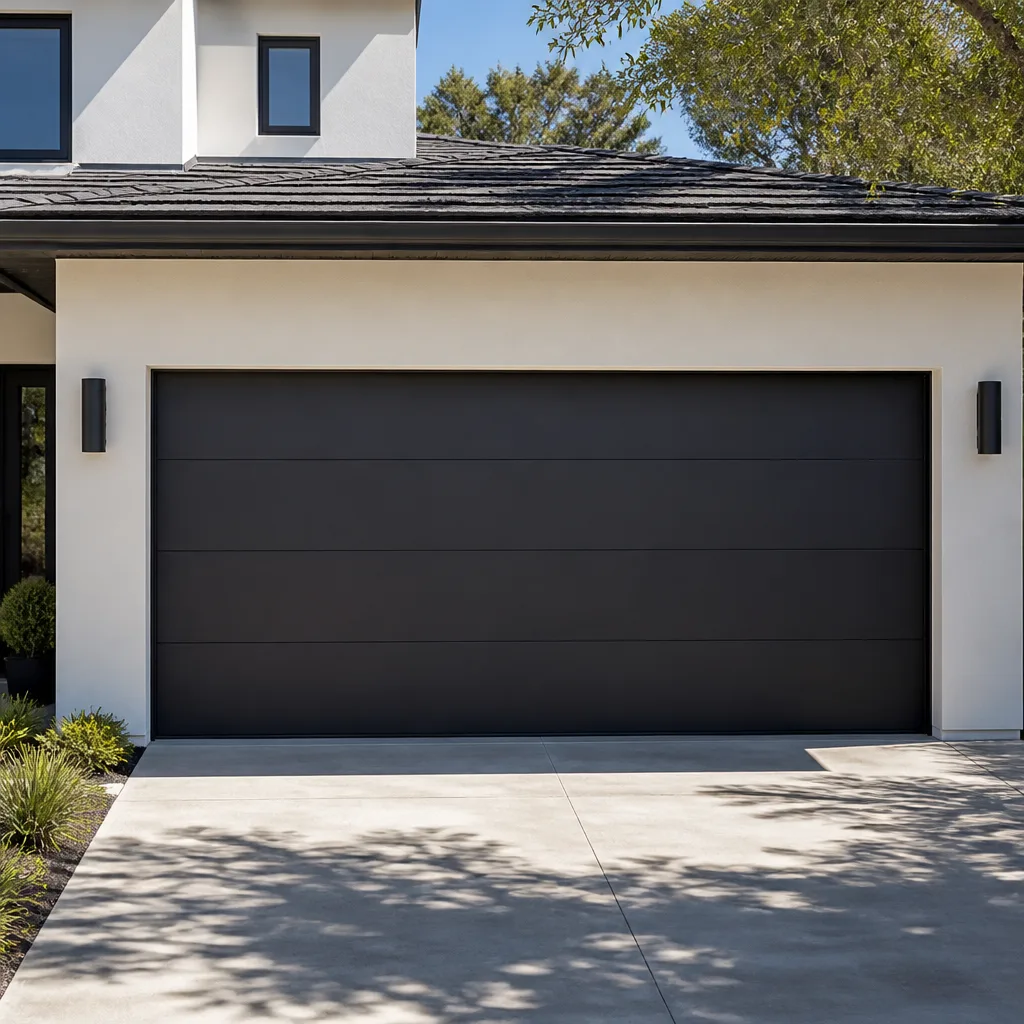 Modern flush
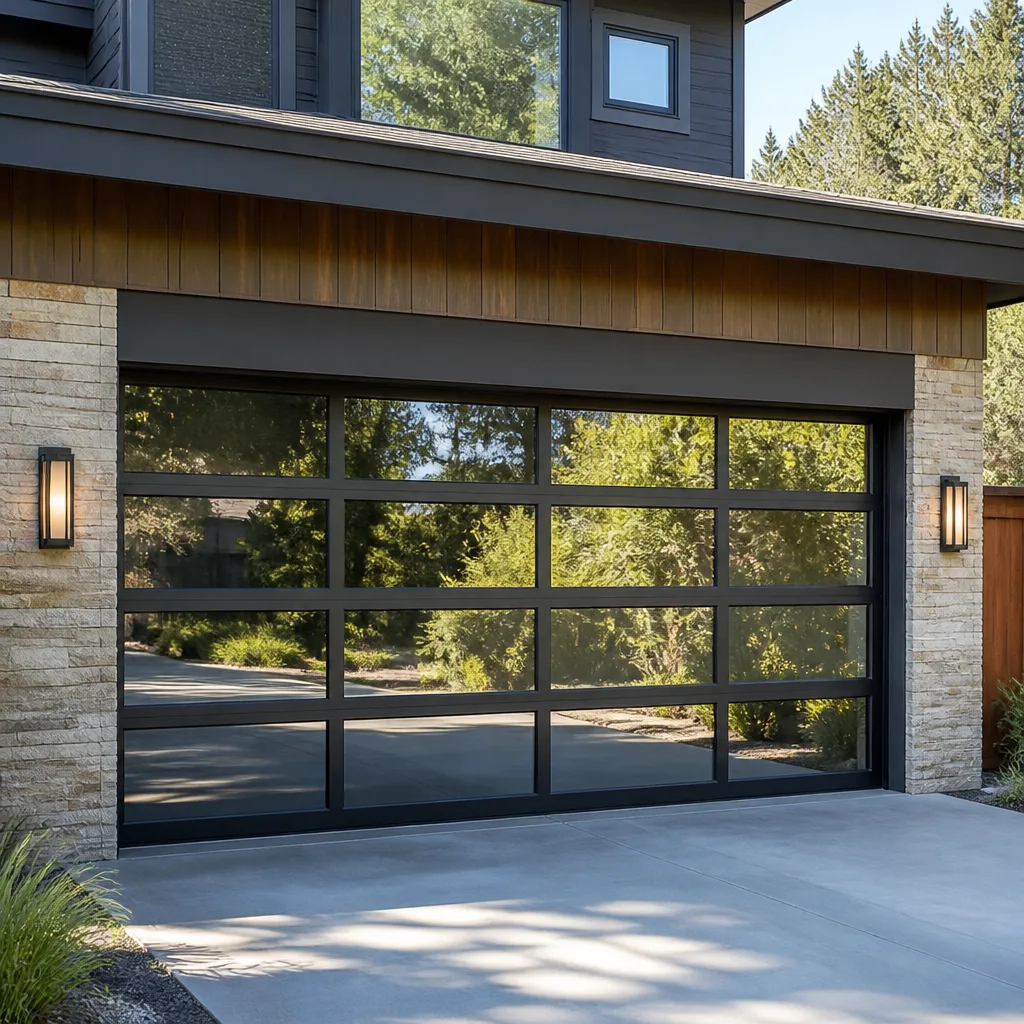 Full-view glass
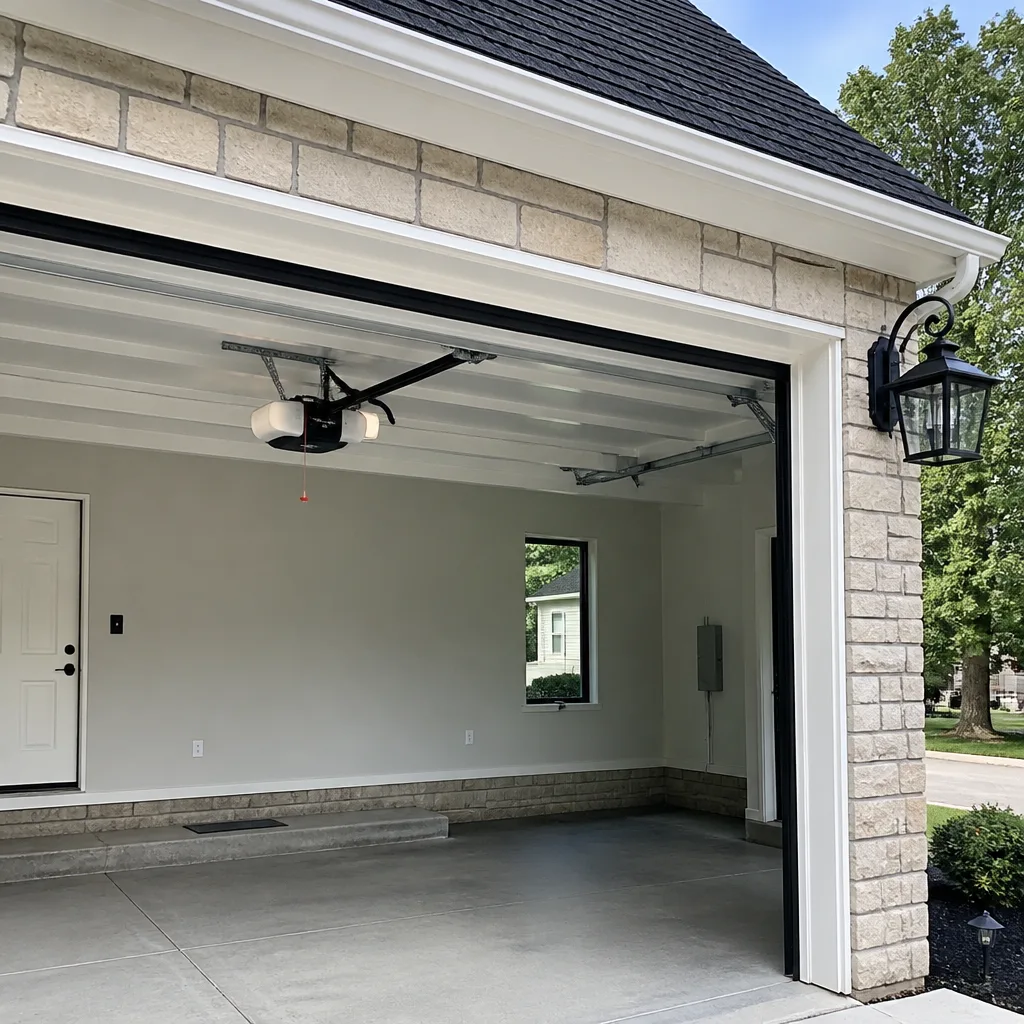 LiftMaster openers
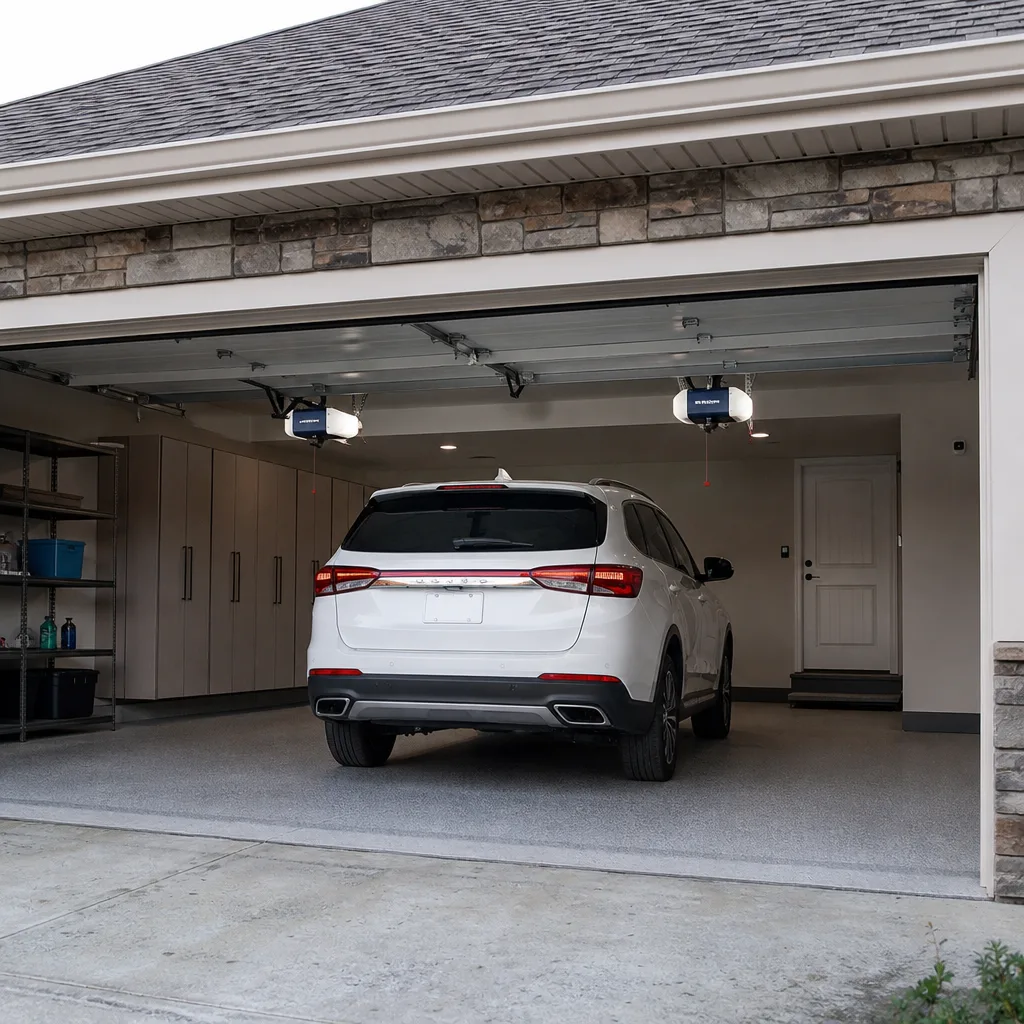 Chamberlain openers
Full 25-point door and opener safety check with every visit - springs, cables, rollers, tracks, and your LiftMaster or Chamberlain opener included
You get a price before we start. It does not change when the truck arrives.
Get your free estimateSeasonal Garage Door Care for Fort Lauderdale: Year-Round Homeowner’s Guide
Most garage door maintenance advice is written for places with frost, snow, and a defined off-season. Fort Lauderdale doesn’t work that way. We get two real seasons: a hot, humid, storm-prone stretch from roughly June through October, and a drier, milder window from November through May when the air finally loses some of its bite. That split shapes every maintenance decision a homeowner should make here. Treat the dry season as your catch-up-and-prepare window, and treat the wet season as a series of load tests on everything your door relies on. This guide walks through the full year, task by task, so you know exactly what to check each month and what’s actually worth paying for vs. what you can handle yourself in twenty minutes on a Saturday. For a deeper dive, see our DIY vs Professional Garage Door: The Fort Lauderdale Homeowner’s Decision Guide.
Styles & brands we work with
Quick Answer
Seasonal garage door care in Fort Lauderdale means doing two distinct sets of tasks: using the dry season (roughly November through March) to lubricate springs and rollers, replace UV-damaged seals, and calibrate the opener’s limit switch before summer heat, and using the pre-hurricane window (April through May) to inspect tracks and test the opener’s battery backup. Most homeowners should budget for weatherstripping replacement every 18-24 months, roller inspection twice a year, and a professional spring and cable check in April or May. For detailed pricing on these services, check our Garage Door Cost Breakdown: The Fort Lauderdale Homeowner’s Reference for 2026. If a storm has passed, run a basic post-storm inspection yourself within 48 hours, and call for a technician if you see track gaps, frayed cables, or the door binds halfway up.
Table of Contents
- Understanding Fort Lauderdale’s Two Real Seasons
- The Dry Season Window (November-March): Why It’s the Best Maintenance Opportunity
- Lubrication Done Right: What to Grease, What to Leave Alone
- UV Degradation: How South Florida Sunlight Wears Out Seals and Panels Faster
- The Pre-Hurricane Checklist (April-May): Wind-Load Integrity, Track Condition, and Battery Backup
- Rainy Season Risks (June-October): Standing Water, Bottom Seal Failure, and Corrosion
- Post-Storm Inspection Protocol: What to Check Safely After a Named Storm
- Common Mistakes to Avoid
- When to Call a Professional
- Frequently Asked Questions
- The Bottom Line
Understanding Fort Lauderdale’s Two Real Seasons
Put aside what you learned about fall and spring garage door maintenance if you moved here from the Northeast or Midwest. Fort Lauderdale’s climate operates on a humidity schedule, not a temperature schedule. We average around 60 inches of rain a year, most of it falling between June and October, with humidity sitting at 65-75% through those months. That constant moisture is what corrodes hardware, swells wood components, and rots rubber seals. Then comes the dry season, from November through March or April, when relative humidity drops into the 50s and 60s, and the morning dew that soaked your door’s lower panels all summer becomes a rare event.
This matters for a specific reason: corrosion damage that accumulates invisibly during the wet season becomes much easier to spot, evaluate, and fix during the dry season. Rust that was hidden under a layer of grime shows itself once things dry out. A bottom seal that was saturated and swollen will contract and crack. A roller bearing that was grinding through the wet season will sound louder in the dry air because there’s less moisture to dampen the noise. If you run a Garage Door Repair in Fort Lauderdale company, you learn quickly that November through February service calls are where we find the real long-term problems, not the urgent ones.
What the Two Seasons Mean for Your Door
- Wet season (June-October): moisture drives corrosion on tracks, springs, hinges, and cables. Standing water from afternoon storms speeds up bottom bracket and bottom seal failure. Wind and pressure changes stress the door’s fit in its opening.
- Dry season (November-March): this is the window for lubrication, seal replacement, roller replacement, and opener calibration. Hardware is dry, so lubricants penetrate better. Rubber is contracted, so you can see cracks and splits that were invisible in the wet season.
The Dry Season Window (November-March): Why It’s the Best Maintenance Opportunity
The dry season, roughly November through March, is when Fort Lauderdale garage doors should get their deep maintenance. For a comprehensive walkthrough, see The Complete Guide to Garage Door in Fort Lauderdale. This stretches from the first real cool front in November through the start of spring break season in March. The air is drier, which means three things: lubricants work better because they aren’t competing with surface moisture, you can spot cracks in seals and rollers more easily, and any rust that formed over the summer has stabilized enough to evaluate.
Here’s the counterintuitive piece. Many Fort Lauderdale homeowners treat this window as the off-season. They don’t think about the garage door because it isn’t making noise and the weather isn’t threatening. But this is exactly when the door is most ready to be worked on. A torsion spring that’s been losing tension over the summer will often reveal itself in December or January, when the cooler metal contracts slightly and the balance check shows the door drifting. Waiting until April to fix it means doing the repair under pre-hurricane time pressure.
Dry Season Task List
- Lubricate all moving parts using a lithium-based grease for the torsion spring and a silicone spray for rollers, hinges, and the opener rail. Do this once in November and again in February.
- Inspect the bottom seal by closing the door and looking for daylight or visible cracks. In the dry season, a failing seal will show itself as a visible gap or crumbling rubber along the bottom edge.
- Run a balance test: pull the release handle, lift the door halfway, and let go. A properly balanced door stays in place. A door that drifts down or up has a spring that’s losing tension.
- Check the safety reverse sensors by placing a roll of paper towels in the door’s path and closing it. The door should reverse immediately when it contacts the object.
- Calibrate the limit switch if the door doesn’t close fully or reverses for no reason. This is the adjustment that tells the opener where the floor is, and it often needs a small tweak after summer heat.
We’ve seen homeowners in Victoria Park, Coral Ridge, and Imperial Point catch real problems during this dry-season work that would have become emergencies in June. A roller with a flat spot that hasn’t failed yet is a $45 fix in January and a Garage Door Spring Repair in Fort Lauderdale call in August if the extra drag was enough to finally snap a tired spring.
Lubrication Done Right: What to Grease, What to Leave Alone
Lubrication is the highest-value, lowest-cost maintenance a Fort Lauderdale homeowner can do, and it’s also the one most people get wrong. The wrong lubricant in the wrong place attracts dirt, and dirt plus humidity equals a grinding paste that destroys moving parts. Here’s the breakdown.
What Gets Lubricated and With What
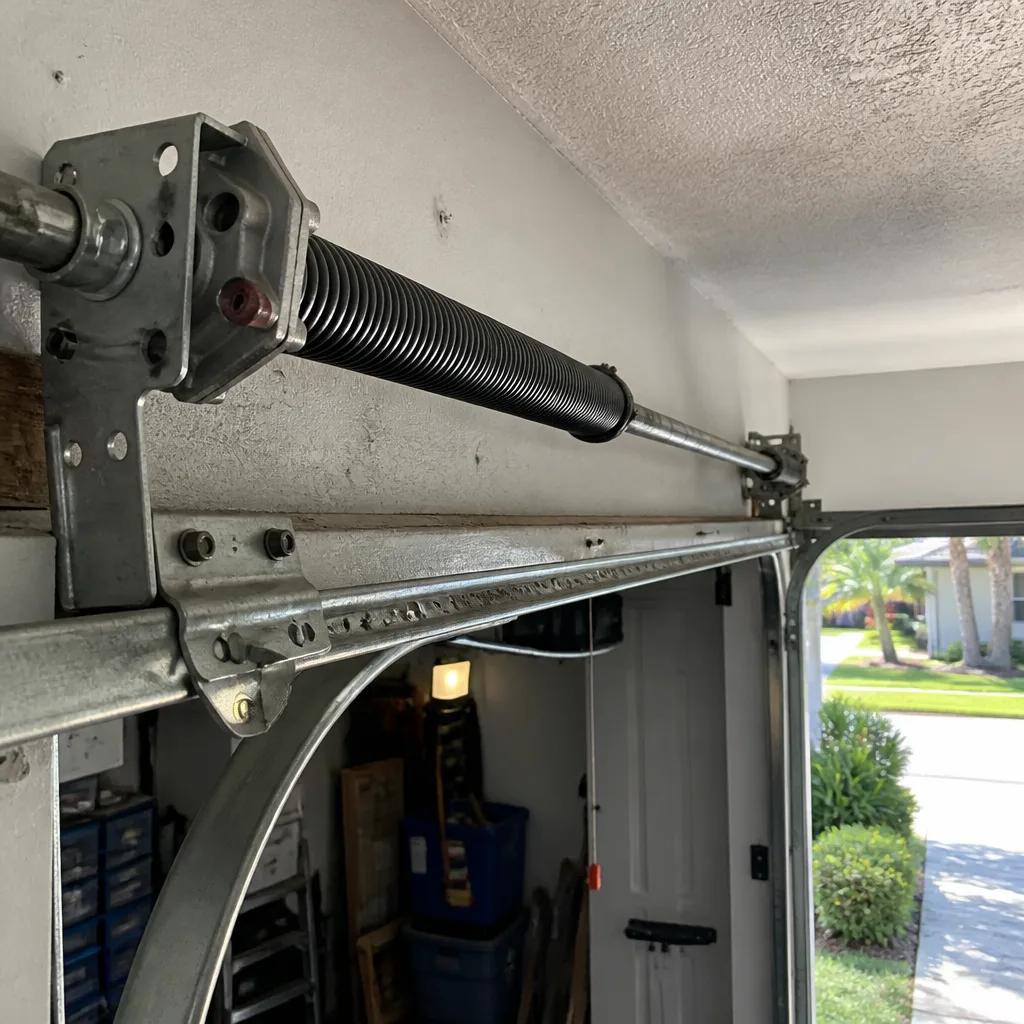
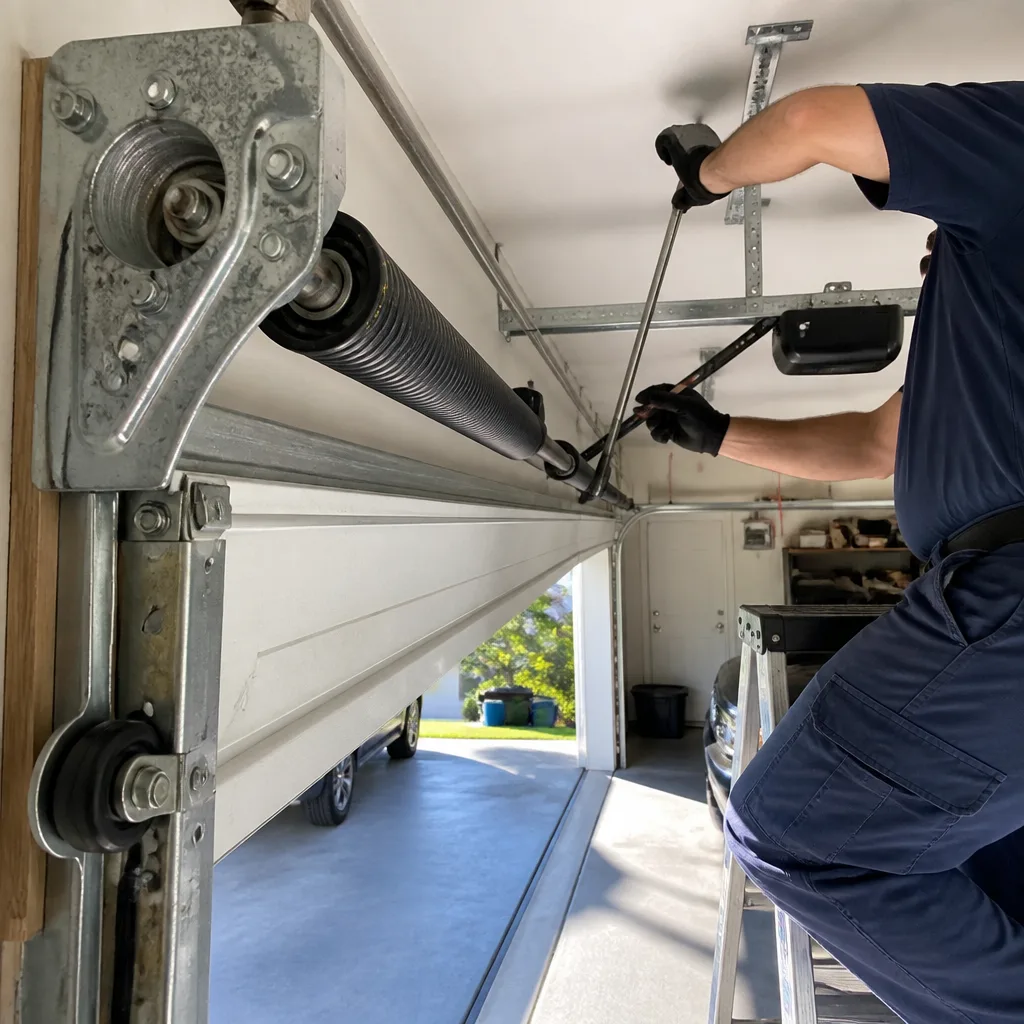
- Torsion spring – the heavy coil mounted above the door that handles most of the lifting weight: use a white lithium grease spray. It’s thick enough to stay on the coil, but light enough to settle into the gaps between coils. Skip the WD-40. That’s a solvent, not a lubricant.
- Rollers – the small wheels that carry the door up and down the tracks: use a silicone spray on the bearing, but only if the roller has an exposed bearing. Sealed-bearing rollers, which come standard on most doors made after 2010, don’t need lubrication. If you aren’t sure, shine a flashlight on the roller: if you can see small ball bearings, it’s open and needs a touch of silicone.
- Hinges – the metal pivot points between door panels: silicone spray works fine. One short spray per hinge joint, twice a year, keeps them from binding.
- Opener rail – the long screw or chain track that the trolley rides along: if it’s a screw-drive opener (common on older Genie and Chamberlain units), spread a thin coat of white lithium grease along the screw. If it’s a chain or belt drive, leave the rail alone. It doesn’t need lubrication.
One warning: never lubricate the tracks themselves. The rollers aren’t designed to slide on grease; they roll on the track surface. Greasing the tracks just collects sand and grit from the driveway, and that’s how you get a door that grinds and sticks. If the track is dirty, wipe it with a dry cloth. That’s all it needs.
UV Degradation: How South Florida Sunlight Wears Out Seals and Panels Faster
Fort Lauderdale gets around 3,000 hours of sunlight a year, and the UV component of that light does real damage to the two parts of your garage door that can’t defend themselves: the weatherstripping and the panel surface. This isn’t a slow, twenty-year fade like you’d see in Ohio. We see weatherstripping turn brittle and crack within 18 to 24 months on doors that face west or south. Paint on metal doors oxidizes faster here than almost anywhere else in the continental U.S., and that oxidation isn’t just cosmetic: once the paint surface breaks down, the metal underneath starts to corrode.
Signs UV Damage Has Set In
- Bottom seal cracks: look along the bottom edge of the door while it’s closed. If you see splits, crumbling, or a gap where the seal used to press against the concrete, it’s time to replace it.
- Side and top weatherstripping brittleness: run your finger along the seal. If it feels stiff and leaves a chalky residue on your hand, the UV has broken down the rubber. It’s also likely letting water and dust into the garage.
- Panel chalking: on painted steel doors, run your hand over the surface. A chalky powder means the paint’s resin has broken down. You can still re-paint at this stage, but if you see rust blooming through, the panel itself is degrading.
- Fading on fiberglass or wood-composite panels: may look cosmetic, but on fiberglass it means the surface gel coat is failing and water can start getting into the panel structure.
Replacement intervals in Fort Lauderdale are shorter than the national averages you’ll find on general home-improvement sites. Bottom seals: plan on 18-24 months. Side weatherstripping: 3-4 years. Panel repainting on metal doors: every 5-7 years, not the 10-12 you’ll hear for northern climates. If you want a set of seals that holds up better in this climate, look for EPDM rubber rather than PVC. EPDM stands up to UV and salt air much better, and it’s what we recommend for any door in Fort Lauderdale that faces the Intracoastal or the ocean.
The Pre-Hurricane Checklist (April-May): Wind-Load Integrity, Track Condition, and Battery Backup
By early May, every Fort Lauderdale homeowner should have run through this checklist. The goal isn’t to make your garage door hurricane-proof. Unless you’ve specifically purchased a wind-rated door, it isn’t. The goal is to make sure the door is in good enough condition that it won’t become the weak point that lets wind pressure into the house and lifts the roof. A garage door that’s properly seated in its tracks, with hardware that isn’t corroded and an opener that has a functioning battery backup, is far more likely to hold through a tropical storm or a glancing hurricane hit than a door that’s been neglected.
Pre-Hurricane Checklist
- Test the balance. Pull the release handle and lift the door manually. It should move smoothly and stay in place at the halfway point. A door that’s hard to lift or falls closed is telling you the spring is failing.
- Inspect both tracks. Look at the vertical tracks on each side and the horizontal tracks near the ceiling. Check for rust that’s eaten into the metal, especially at the bolt holes. Check the bolts themselves are tight. Look for any gap between the track and the wall or ceiling.
- Check the track brackets. These are the metal arms that hold the tracks to the wall. If any bracket has pulled loose or shows rust through the bolt hole, it’s a structural problem, not a cosmetic one.
- Test the opener’s battery backup. Unplug the opener and try to run it. If it doesn’t respond, the battery is dead. On LiftMaster and Chamberlain units, the battery is a small black box on the side of the motor head and can be swapped in a few minutes. On some Genie units, it’s integrated and takes longer.
- Run the auto-reverse test. It’s impossible to overstate how important this is. A door that doesn’t reverse is a safety hazard every day of the year, but during a storm, it’s also a structural liability. A door that drifts or slams could damage the track, and then you have a much bigger problem.
If the door binds at any point in its travel, or you notice the tracks are no longer perfectly parallel to each other, that’s a call to us before the season starts. We’d rather send a technician out in May to fix a slightly-off track than in August, when a door jammed in the open position during an afternoon thunderstorm means rain and wind blasting into the garage. Fort Lauderdale homeowners who have lived through a few hurricane seasons know that last point isn’t theoretical.
Rainy Season Risks (June-October): Standing Water, Bottom Seal Failure, and Corrosion
The rainy season in Fort Lauderdale runs from roughly June through October, and it brings two things that wear out garage doors faster than anything else: standing water and constant humidity. Afternoon thunderstorms drop an inch or two of rain in under an hour. The water pools on driveways, especially in older neighborhoods with flat lots, and that pooling is where garage door hardware starts to fail. Not at the top of the door, but at the very bottom, where the bottom brackets and the bottom seal sit.
Standing Water and the Bottom Seal
A bottom seal that’s in good condition should press firmly against the garage floor and keep water from entering. But in Fort Lauderdale’s rainy season, we regularly see two failure patterns. First, the seal itself cracks or loses its shape after a year or two of UV exposure, and water starts seeping under the door. Second, the concrete garage floor settles slightly over time, creating a low spot in the middle of the opening. No seal can compensate for a 1/4-inch dip in the concrete. The water gets under the door, sits in the garage, and then the humidity from that standing water does its work on the bottom brackets, the hinges, and the lower panel.
The drainage fix that actually works isn’t a new seal, it’s a threshold seal. This is a raised rubber or aluminum strip that’s anchored to the garage floor with construction adhesive and sits under the door. The door’s bottom seal then presses against the top of the threshold, and the water that used to flow under the door now hits the threshold and runs off. In Fort Lauderdale neighborhoods with flat driveways and older slabs, like portions of Lauderdale Manors or Riverland, a threshold seal is often the only thing that actually keeps the garage dry during a heavy afternoon storm. We’ve installed them in dozens of garages, and they solve the problem that a third replacement seal never touches.
Corrosion from Humidity Alone
Even if no water ever reaches the garage floor, the constant 70-80% humidity through the wet season is enough to start rust on any exposed steel. Torsion springs, which sit above the door and are never wiped down, are the most vulnerable. A thin layer of lithium grease, applied in November and again in February, is the best defense. If you’re seeing surface rust on the springs, the spring is still safe to use, but the rust should be wiped off and the spring re-greased. Deep pitting rust, where the metal looks like it’s flaking, is a sign the spring is near the end of its life and should be evaluated by a technician.
Post-Storm Inspection Protocol: What to Check Safely After a Named Storm
After a hurricane or tropical storm has passed and the power is back, run through this inspection within 48 hours. Do not attempt any task that involves touching a spring, a cable, or the opener’s electrical connections. Those are not do-it-yourself items, and a cable under tension can break bones or worse. The post-storm check is about identifying damage, not fixing it.
The Post-Storm Safety Check
- Look at the door from outside, from about ten feet back. Are the panels dented or misaligned? Is the door still square in its opening? A door that’s shifted visibly after a storm has probably sustained track damage.
- Look at the tracks. On each side, run your eyes up the vertical track, across the curved section, and along the horizontal track near the ceiling. Look for fresh bends, loose bolts, or gaps between the track and the wall. Do not put your fingers in the track while the door is still connected to the opener.
- Run the opener once. If it moves the door smoothly and fully, that’s a good sign. If it hesitates, grinds, or reverses partway, stop using it and leave the door closed.
- Pull the release handle and lift the door manually. Do this only if the door doesn’t feel jammed. Lift it a foot and let go. If it drifts or drops, the spring is compromised. Lower the door carefully and call us.
- Check the cables. The cables run from the bottom brackets up to a drum above the door. If you see fraying, loose strands, or a cable that’s slipped off its drum, that’s a technician call, not a DIY fix.
In our experience, the most common post-storm issues in Fort Lauderdale are track bolts that have worked loose from the wind-driven vibration and doors that have shifted slightly in their openings. If the door still opens and closes but makes a scraping sound at one point, there’s a track alignment issue that will get worse. It’s better to fix it within a few days than to wait a month and deal with a door that’s completely jammed.
Common Mistakes to Avoid
- Lubricating with WD-40. WD-40 is a water displacer and solvent, not a lubricant. It temporarily quiets a squeak by washing away the existing grease, and then the metal is more exposed than before. Use white lithium grease on the spring and silicone spray on rollers and hinges.
- Doing maintenance only when the door stops working. By the time a Fort Lauderdale garage door fails completely, the root cause has usually been developing for months. A broken spring in August is often the result of six months of neglected maintenance, plus the added stress of heat and humidity.
- Replacing the bottom seal without checking the floor. If the garage floor has settled and created a low spot, a new seal won’t fix the leak. The water will still get in underneath it. Check the floor, and if you see daylight under a level placed across the opening, you need a threshold seal, not just a new rubber strip.
- Ignoring the opener’s battery backup. Many LiftMaster and Chamberlain openers have a battery backup, but the battery only lasts 2-3 years. If you’ve never replaced it, it’s probably dead. Test it in April so you aren’t testing it for the first time after a storm.
- Working on a door while the opener is still connected. Always pull the release handle and put the door in manual mode before you do any inspection work. A door that runs while you’re inspecting it is a finger-breaking hazard.
- Painting over rust without treating it first. On Fort Lauderdale’s coated metal doors, painting over rust just seals the moisture in. The rust continues to spread under the new paint, and you’re back to bare metal within a year. Wire-brush the rust, prime with a rust-inhibiting primer, then paint.
When to Call a Professional
There’s a clear line between what a Fort Lauderdale homeowner should handle themselves and what belongs with a trained technician. If you can see it, hear it, and it doesn’t involve stored energy or electricity, you can probably manage it yourself. Lubrication, seal inspection, visual track checks, and the auto-reverse test are all in that category. If the issue involves a torsion spring, a cable under tension, the opener’s motor or limit switch internals, or a door that’s binding and won’t move smoothly, it’s time to call in a professional. A torsion spring holds enough energy to break bones if it lets go, and cables under tension can cut. No maintenance guide should ever encourage a homeowner to work on those parts.
Bramwell Garage Doors Fort Lauderdale home is our starting point: we offer free estimates across Fort Lauderdale. Call (754) 701-2440 and a live person answers, 24/7. We’ll give you a written price before any work starts, show you exactly what’s covered and for how long, and every repair is backed by the 365-Day Done Right Promise. That’s the Kingswell standard: the price you hear is the price you pay, we arrive in the window we give you, and if the repair fails inside the guarantee period, we come back at no charge. It’s in writing.
Frequently Asked Questions
Twice a year is the right interval for our climate: once in November, when the dry season starts, and again in February, before the transition back to humidity. Use a white lithium grease on the torsion spring and a silicone spray on the rollers, hinges, and opener rail. If your door faces the ocean or the Intracoastal, the salt air means you might need a third application in July. Call (754) 701-2440 if you’re not sure what your rollers need, and we’ll walk you through it.
The pre-hurricane track and balance check in April or May. Most homeowners think about the door during hurricane season, but the prep work has to happen before the first named storm. A door that isn’t balanced or has loose track bolts is far more likely to fail during high winds. Garage Door Installation in Fort Lauderdale calls spike right before a storm. Don’t be that homeowner; get the existing door checked in April.
Yes, if the floor is level and the old seal slides out of its track or unbolts cleanly. The job takes about 30 minutes. But if the floor has settled and created a low spot, the new seal won’t stop the water. In that case, you need a threshold seal, which is installed on top of the concrete. That’s also a manageable DIY job, but it’s easier with two people and construction adhesive that bonds to clean concrete.
Most torsion springs are rated for 10,000 cycles, which translates to roughly 7-12 years for the average Fort Lauderdale homeowner. If your door is used more than the average, the spring can wear out in half that time. The telltale sign is a door that’s suddenly hard to lift manually or that reverses when it’s trying to close. If you’re seeing either, the spring needs to be looked at before it fails completely. A broken spring usually happens when the door is closed, which means your car is trapped inside.
If you live in a hurricane-prone part of Broward County, yes. After a storm, the power can be out for days, and the garage is often the only practical way to get your car out and back in. LiftMaster and Chamberlain openers with integrated battery backups are common, and the battery will run the door for about 24 hours of normal use. Replace the battery every 2-3 years, and test it in April. Call (754) 701-2440 for a free estimate if your opener doesn’t have one and you want to add it.
It covers any repair we perform. If the repair fails inside one year, we come back and fix it at no charge. That commitment is in writing, on every job, before we leave. It’s the Kingswell standard, and it’s been that way since 2001. The same written guarantee applies to every repair from Bramwell Garage Doors Fort Lauderdale, so you never have to wonder what’s covered and for how long after the technician drives away.
The Bottom Line
Fort Lauderdale garage doors live under constant stress: UV light, salt air, standing water, and a hurricane season that tests every structural component. The homeowners who get the longest life from their doors are the ones who shift their thinking from “fix it when it breaks” to “maintain it when the climate gives me a clean window.” That window is November through March for lubrication, seal replacement, and opener calibration. April through May is for hurricane prep: track checks, balance tests, and battery backup verification. Do those things every year, and you’ll avoid most of the emergency calls that come from doors that were never given a chance. For more guides & resources on keeping your door running smoothly, visit our blog. Written by Marcus Ellery, Owner at Bramwell Garage Doors Fort Lauderdale, serving Fort Lauderdale since 2001.
See the difference
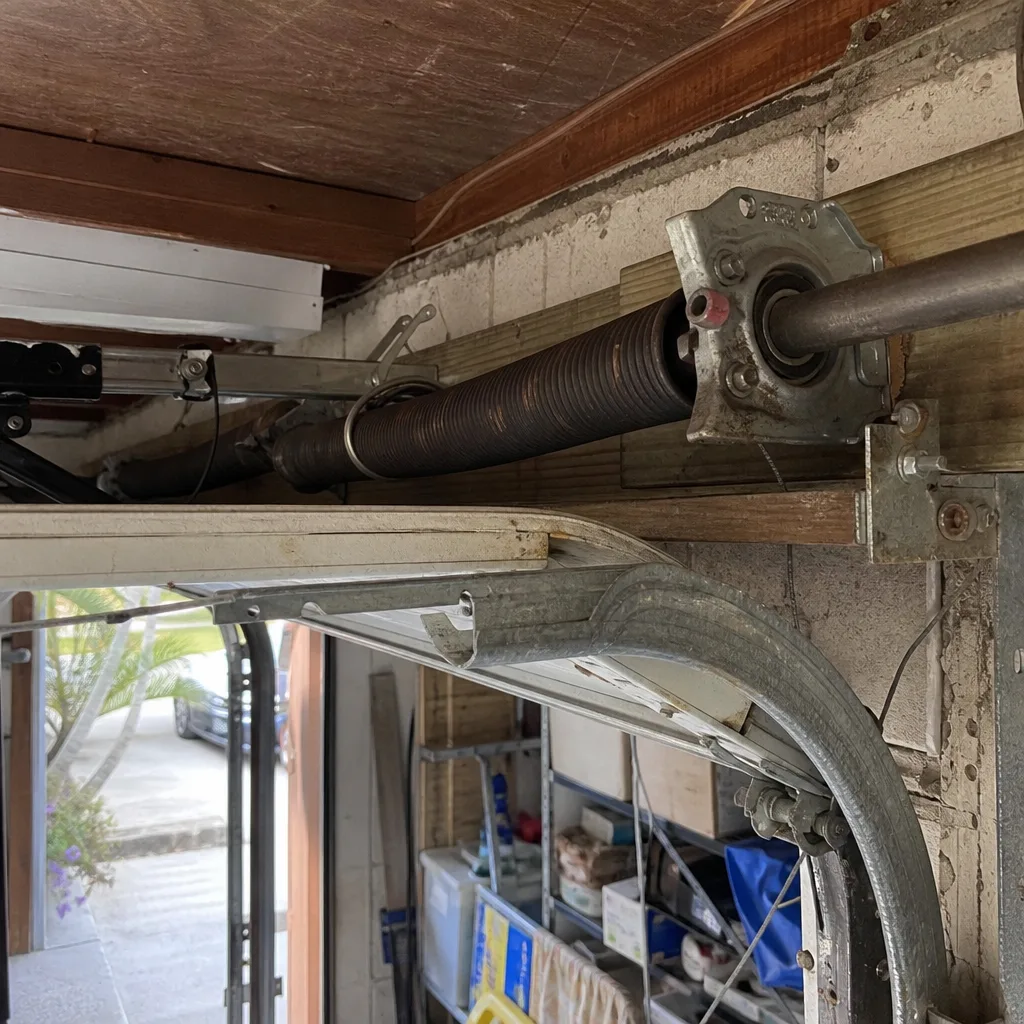 Before
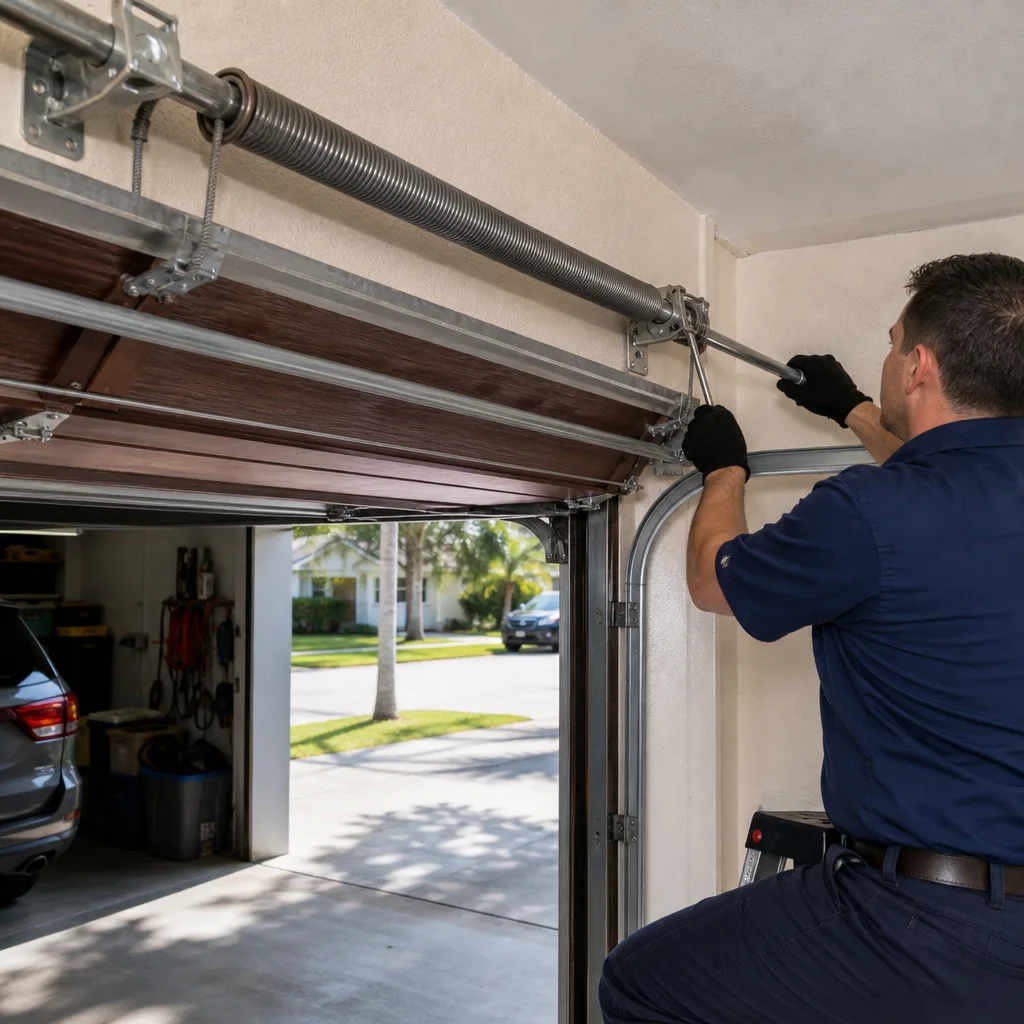 After
After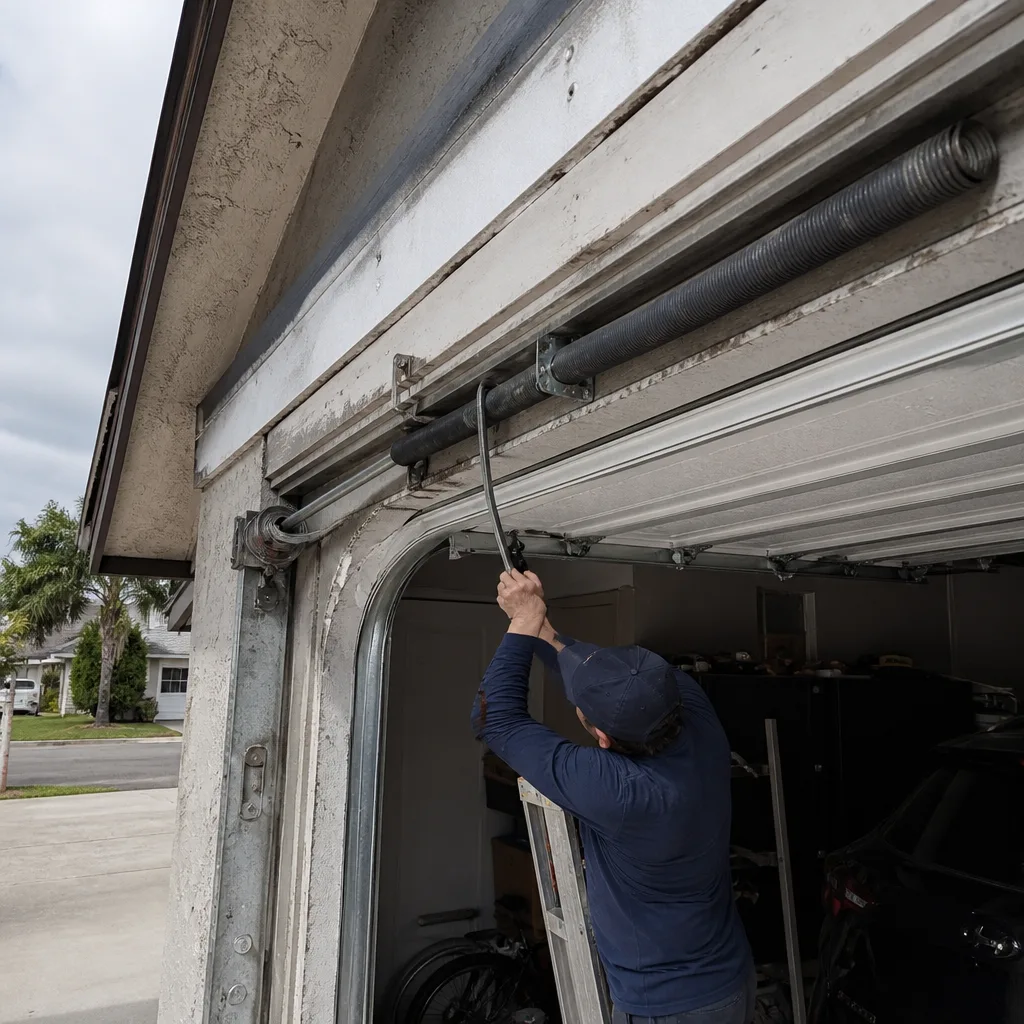 Before
 After
After Before
 After
After